
Why Do Design Teams Struggle with Plan Review Software Adoption?
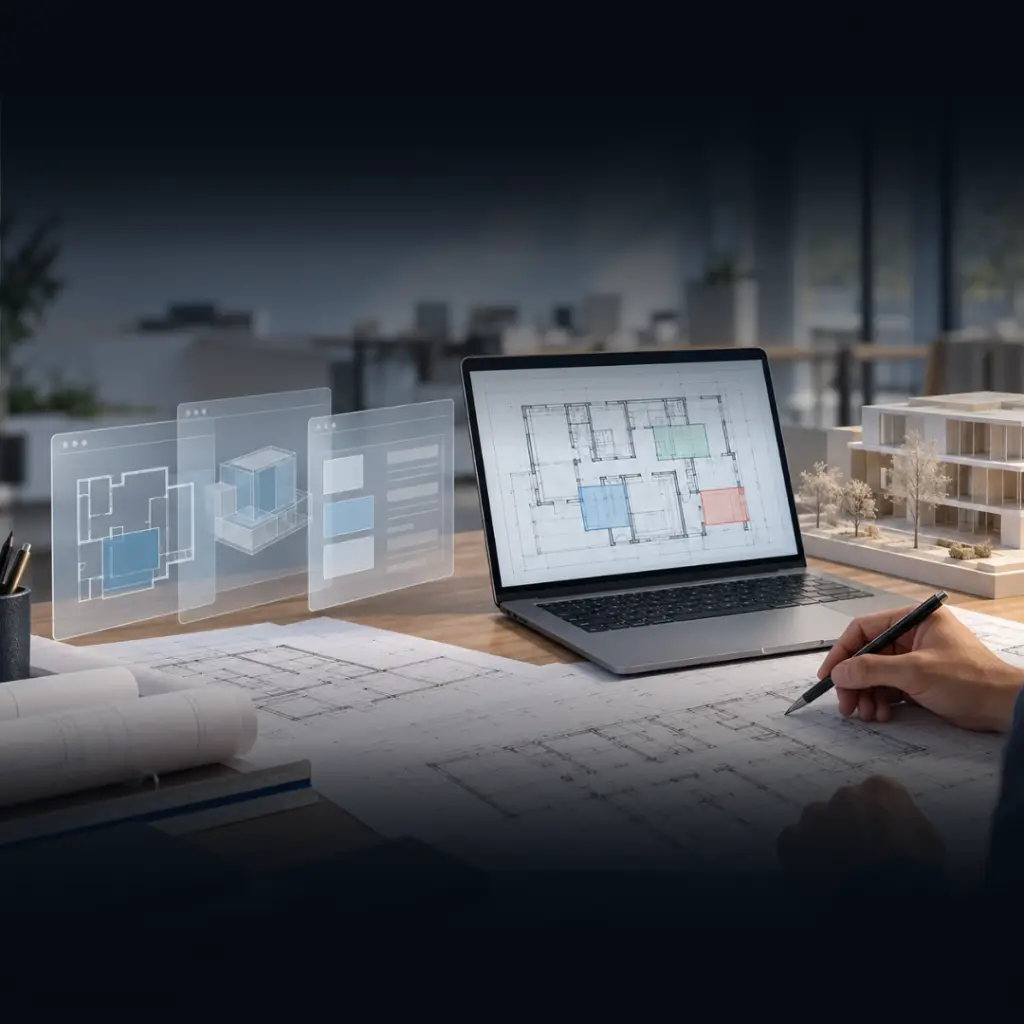
Why Do Design Teams Struggle with Plan Review Software Adoption? Design teams can struggle to adopt plan review software when it adds administrative work, lacks construction-specific knowledge, or produces findings they cannot confidently verify. Successful adoption depends on fitting existing workflows and providing clear, actionable review results. Architects and engineers already manage drawing revisions, consultant coordination, client expectations, and submission deadlines. Introducing another platform means asking a busy team to change how it works. For that change to last, the software needs to earn its place in the process. Here are three barriers that can stand in the way—and how PlanCheckPro.AI addresses them. 1. Software Can Create More Work Before It Delivers Value A tool may promise greater efficiency while requiring teams to reformat drawings, duplicate project information, or spend time organizing outputs before they can use them. That creates a practical adoption problem: the effort is immediate, while the benefit remains uncertain. Before adopting plan review software, design teams should ask: Can we use the drawing files we already produce? How much preparation does each review require? Will the output help us make revisions? Where will this step fit into our existing quality-control process? How PlanCheckPro.AI Addresses This Barrier PlanCheckPro.AI accepts standard PDF construction drawings and returns a compliance report the same day, according to its website. Teams can use the drawing format already familiar to their submission process. A practical starting point is to review one drawing set before submission. The team can then evaluate how useful the findings are and decide where the platform fits into its workflow. 2. Generic Software Can Miss Construction Context Organizing documents and checking construction plans for code compliance require different capabilities. A design team needs feedback that connects a potential issue to the drawing, the relevant requirement, and a useful next step. Broad observations can leave the reviewer doing substantial research before any revision can begin. For example, a comment such as “check accessibility” gives a team little direction. A useful review finding needs enough detail for a professional to investigate and determine the appropriate response. What Makes PlanCheckPro.AI Different? Created by Pacifica Engineering Services, PlanCheckPro.AI focuses on construction code compliance. Its website describes review across architectural, structural, mechanical, electrical, and plumbing drawings, with coverage including local building codes, NEC, NFPA, and ADA requirements. This focus gives design teams a more relevant basis for evaluating the platform: whether its findings help them identify and address potential compliance issues in their actual projects. 3. Unclear Findings Make Accountability Difficult Trust becomes harder when software flags a concern without explaining its basis. A design professional needs to understand why an issue was raised before changing a drawing. Within the team, someone also needs to evaluate the finding, coordinate the response, and confirm that any necessary revision has been completed. A useful review process should answer three questions: What needs attention? What requirement supports the finding? Who will evaluate and resolve it? How PlanCheckPro.AI Supports Traceable Review PlanCheckPro.AI provides specific code citations and recommended corrective actions with its findings. The platform supports professional review, with people retaining the final judgment. That information gives teams a starting point for checking a finding and documenting their response. Accountability also depends on the team’s own process for assigning and closing review items. How Can Design Teams Make Adoption Easier? Start with a defined use case, such as a code compliance check before permit submission. Choose one project, assign a professional to evaluate the results, and track whether the review helps the team identify useful corrections. Consider both the preparation time and the time needed to assess the findings. An initial pilot can help answer a more meaningful question than whether the software is fast: does it make the team’s review process more effective? Frequently Asked Questions What is plan review software? Plan review software helps professionals examine construction drawings. Capabilities vary, so teams should distinguish between document markup tools, collaboration platforms, and software that evaluates code compliance. Why is construction-specific software useful for design teams? Construction-specific software focuses on the drawings, requirements, and review tasks relevant to building projects. Teams should assess whether its outputs provide enough context to support practical decisions. What makes PlanCheckPro.AI different? PlanCheckPro.AI combines PDF-based submission with construction-focused compliance review and reports containing code references and suggested corrections. How should a team evaluate plan review software? Test it on a representative project. Assess preparation effort, relevance of findings, clarity of explanations, and how easily the results fit into the team’s quality-control process. Bring More Clarity to Your Next Plan Review Software adoption starts with a clear reason to use it. For design teams, that means useful findings, manageable workflows, and information they can evaluate with confidence. Explore how PlanCheckPro.AI can support your team’s next review. Get Free Access
Florida Building Code, 9th Edition (2026), Now Available on PlanCheckPro.AI

Florida Building Code, 9th Edition (2026), Now Available on PlanCheckPro.AI The Florida Building Code, 9th Edition (2026), is now available on PlanCheckPro.AI. Registered users can review their construction plans against the upcoming edition ahead of its official effective date on December 31, 2026. For architects, engineers, contractors, and developers, early access offers an opportunity to identify potential compliance issues while projects are still in design—and prepare for the code transition before submitting plans. Why Prepare for the New Florida Building Code Now? A code transition can affect projects long before construction begins. A drawing set developed today may move into permitting after the next edition takes effect. Waiting until submittal to evaluate applicable requirements can leave teams with less time to address issues, coordinate revisions, and update their documents. Reviewing earlier gives project teams more room to make informed decisions. An early code compliance review can help teams: Identify potential issues before submitting plans. Coordinate necessary changes across disciplines. Reduce avoidable redesigns and resubmittals. Prepare for conversations with reviewers and permitting authorities. Plan for projects that may cross the code transition. The applicable edition depends on the project’s permitting circumstances. Confirm which requirements apply with the authority having jurisdiction. Review Against Both the Current and Upcoming Editions PlanCheckPro.AI allows users to review plans against both the current Florida Building Code and the upcoming 9th Edition. This flexibility helps teams evaluate current project needs while preparing for future submissions. Teams can run separate reviews against each edition to assess potential issues and determine where further evaluation may be needed. Access to the upcoming edition does not change its official effective date. It gives users an opportunity to prepare ahead of the transition. Bring Code Review Earlier into Your Design Process Code compliance review is more useful when teams have time to act on the findings. By incorporating AI plan review during design development and before submittal, project teams can identify potential concerns while revisions are easier to coordinate. Findings can help guide discussions among architects, engineers, consultants, and other project stakeholders. AI plan review supports that process by flagging potential issues for professional evaluation. Project teams remain responsible for reviewing findings, applying the appropriate requirements, and coordinating with the permitting authority. How to Access the 9th Edition on PlanCheckPro.AI Already registered? Log in to your PlanCheckPro.AI account. Select the Florida Building Code, 9th Edition (2026), when running your next plan check. Review the findings and coordinate any necessary follow-up with your project team. New to PlanCheckPro.AI? Sign up to begin reviewing your plans and preparing for the upcoming code transition. Frequently Asked Questions Is the Florida Building Code, 9th Edition (2026), available on PlanCheckPro.AI? Yes. Registered users can select the 9th Edition when running a plan check on PlanCheckPro.AI. When does the 9th Edition officially take effect? The official effective date is December 31, 2026. Availability on PlanCheckPro.AI allows users to review plans ahead of that date. Can I still review plans against the current edition? Yes. PlanCheckPro.AI supports reviews against both the current and upcoming editions, allowing teams to select the edition appropriate to their review. Does reviewing against the new edition mean it applies to my project? No. Selecting an edition for an early review does not determine which code governs your project. Confirm the applicable edition and transition requirements with the authority having jurisdiction. Get Your Projects Ready for the Transition Preparing early gives your team time to evaluate findings, coordinate revisions, and approach submittal with greater clarity. Log in, select the 9th Edition, and get ahead of the December 31 transition. Visit PlanCheckPro.AI to Get Started
PlanCheckPro.AI at the FAPGMI 61st Annual Trade & Conference Show

PlanCheckPro.AI at the FAPGMI 61st Annual Trade & Conference Show PlanCheckPro.AI recently participated in the Florida Association of Plumbing-Gas-Mechanical Inspectors (FAPGMI) 61st Annual Trade & Conference Show in Cocoa Beach, Florida. The event brought together building inspectors, plan reviewers, contractors, engineers, architects, manufacturers, and other industry professionals for education, networking, and conversations about the issues affecting building departments and the construction industry across Florida. What Is the FAPGMI Annual Trade & Conference Show? The Florida Association of Plumbing-Gas-Mechanical Inspectors (FAPGMI) is a professional organization serving inspectors, contractors, architects, engineers, manufacturers, and other organizations involved in Florida’s building industry. The association has been serving the industry since 1965, with a focus on protecting the health, safety, and welfare of Florida communities. Its annual conference provides an opportunity for industry professionals to connect, exchange knowledge, participate in continuing education, and discuss issues affecting code compliance and building safety. Understanding the Challenges Facing Building Departments For PlanCheckPro.AI, attending the conference provided an important opportunity to speak directly with building inspectors, plan reviewers, and building officials about their day-to-day challenges. Many of the conversations centered around issues that can make the permitting and plan review process more difficult, including: Staffing shortages and limited review capacity Disconnected software and workflows Repetitive manual plan review tasks Increasing volumes of construction documents The need for more efficient code compliance processes These conversations reinforced the importance of developing technology that supports the professionals responsible for reviewing construction documents and enforcing building codes. How Can AI Support Building Departments and Plan Review? AI plan review technology can help building departments and code professionals analyze construction drawings, identify potential code compliance issues, and organize review findings more efficiently. PlanCheckPro.AI performs automated code compliance reviews of construction drawings across multiple disciplines and provides organized findings with applicable code references and corrective direction. Rather than replacing building officials, plan reviewers, or professional judgment, the technology is designed to provide an additional tool that can support existing review workflows. By automating portions of the construction drawing review process, AI can help professionals focus their time and expertise where they are needed most. Connecting Technology With the People Who Review Plans One of the most valuable parts of the FAPGMI conference was hearing directly from the professionals working inside building departments. Understanding their workflows, challenges, and priorities helps PlanCheckPro.AI continue developing technology around real-world plan review needs rather than technology alone. The positive conversations and feedback we received throughout the event made the conference a valuable opportunity to connect with Florida’s code compliance community. Looking Ahead PlanCheckPro.AI appreciates the opportunity to participate in the FAPGMI 61st Annual Trade & Conference Show and connect with building officials, inspectors, plan reviewers, contractors, engineers, architects, and other industry professionals. We look forward to continuing these conversations and exploring how AI plan review can support more efficient, consistent, and connected code compliance workflows. We also hope to participate in future FAPGMI events as the industry continues exploring new ways to improve the plan review and permitting process.
AI and HUD: Officials Nationwide Join PlanCheckPro.AI Webinar to Explore the Future of Automated Permitting
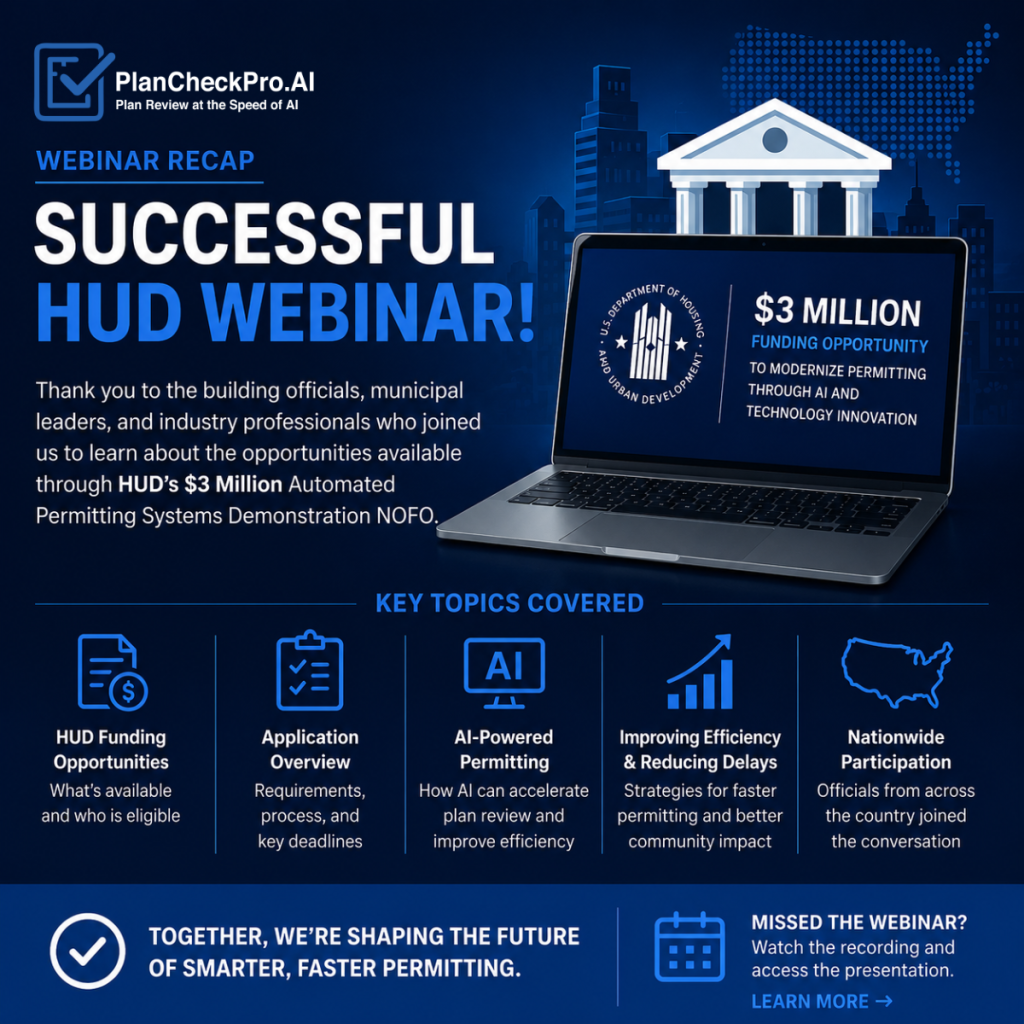
Building Officials, Municipal Leaders, and Industry Professionals Came Together to Learn About HUD’s $3 Million Funding Opportunity Communities across the country are actively looking for new ways to modernize permitting, reduce review times, and improve the customer experience. That growing interest was evident during PlanCheckPro.AI’s recent webinar on the HUD Automated Permitting Systems Demonstration NOFO, which brought together building officials, local government representatives, engineers, and industry professionals from across the United States. The webinar focused on helping attendees understand the opportunities available through HUD’s $3 million funding initiative, designed to support jurisdictions implementing innovative technologies that improve permitting efficiency and accelerate housing development. A Strong Response from Public Sector Leaders The webinar received an outstanding response, with officials from numerous jurisdictions joining to learn how artificial intelligence can support the future of permitting. Participants explored how emerging technologies are helping agencies: Modernize permitting workflows Reduce plan review turnaround times Improve code compliance consistency Increase operational efficiency Better serve developers, design professionals, and their communities The high level of engagement throughout the session reflected a growing national conversation around digital transformation in the public sector. Understanding the HUD Automated Permitting Systems Demonstration NOFO During the webinar, attendees received an overview of HUD’s funding opportunity, including: Program objectives Eligibility requirements Available funding Application process Implementation considerations Potential uses of AI in permitting operations The discussion highlighted how jurisdictions can leverage funding to evaluate and deploy technologies that streamline plan review while maintaining the integrity of the code compliance process. AI Is Transforming the Permitting Process One of the key themes throughout the webinar was the increasing role of artificial intelligence in supporting—not replacing—building officials and plan reviewers. AI-powered plan review enables agencies to identify potential code compliance issues earlier, reduce repetitive manual tasks, and improve consistency across reviews. These tools allow reviewers to spend more time applying professional judgment while technology helps accelerate routine compliance checks. As permitting demands continue to increase nationwide, many jurisdictions are exploring how AI can become an important part of a modern permitting strategy. Thank You to Everyone Who Joined We sincerely thank everyone who participated in the webinar and contributed to an engaging discussion. The thoughtful questions and strong attendance demonstrated the growing commitment among public agencies to explore innovative solutions that improve permitting efficiency and support responsible community growth. The enthusiasm shown by building officials and municipal leaders reinforces what we’re seeing across the industry: jurisdictions are actively seeking practical technologies that help deliver faster, more efficient services while maintaining high standards for safety and code compliance. Continuing the Conversation The HUD funding opportunity represents an exciting step toward modernizing permitting across the country, and PlanCheckPro.AI is proud to support jurisdictions as they evaluate the role AI can play in that transformation. If you were unable to attend the live session, the webinar recording and presentation materials are available to help you learn more about the funding opportunity, application process, and how AI-assisted plan review can support your community’s permitting goals. As more agencies embrace innovation, PlanCheckPro.AI remains committed to helping building departments, municipalities, and industry professionals streamline plan review, improve efficiency, and accelerate project approvals through intelligent, practical AI solutions.